Local // Bay Area & State
Oakland homelessness surges 47% — per-capita number now higher than SF and Berkeley

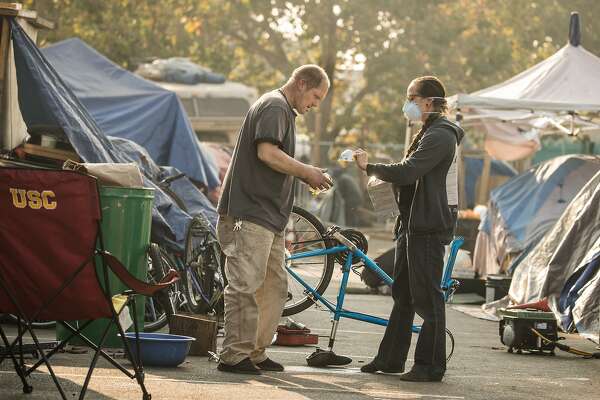
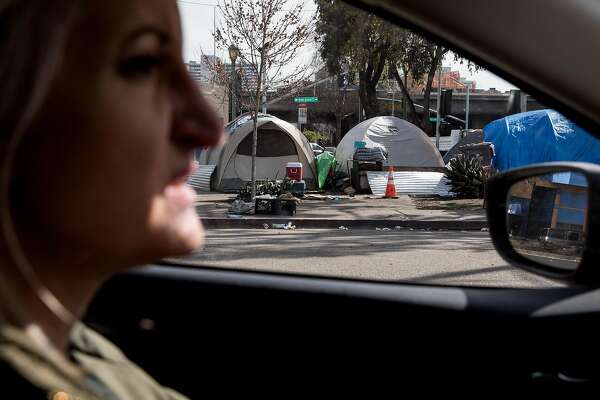
Oakland’s
homeless population rose 47% between 2017 and 2019, one of the biggest
two-year increases of any California city, according to a one-night
street count released Monday by county officials.
The
jump means Oakland’s per capita homeless rate now surpasses the same
figure in San Francisco and Berkeley, at a time when cities around the
Bay Area and the country are struggling with a crisis driven by drug
addiction, mental illness and a lack of housing.
In
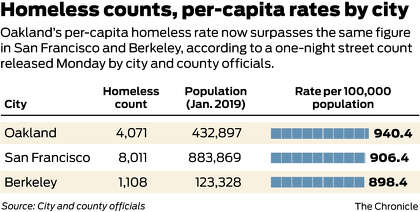
the count taken in January using federal guidelines, Oakland had 861
sheltered people and 3,210 unsheltered people, bringing the estimated
number of homeless people to 4,071. In 2017, Oakland had 859 sheltered
people and 1,902 unsheltered residents, a total of 2,761.
- Unlimited Digital Access for 95¢
- Read more articles like this by subscribing to the San Francisco Chronicle
The
spike, which shocked many at City Hall, comes despite efforts by the
city to tackle the homelessness problem, including the creation of
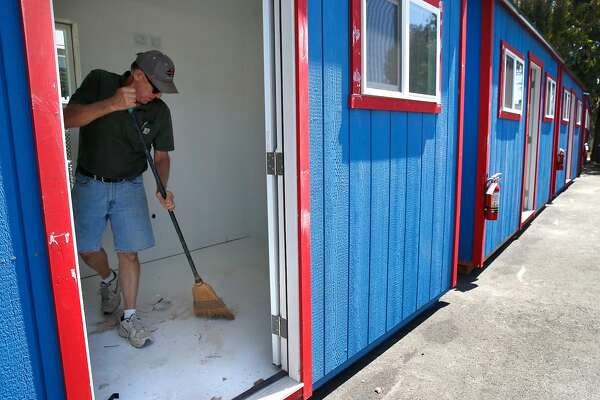
community cabins and the opening of a safe RV parking site.
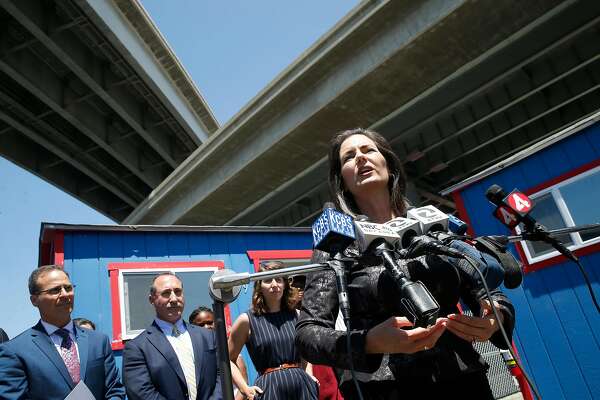
“Of
course, it is disappointing ... that we’ve had the highest increase, at
least in the Bay Area,” said Oakland Mayor Libby Schaaf. “It shows that
we need to do more; we need to do things differently and we need to act
with a sense of urgency that is greater than anything we’ve seen in the
past.”
Oakland’s homelessness rate is now 940 per 100,000 population, slightly higher than San Francisco, at 906, and Berkeley, at 898.
The
city’s homeless population accounts for nearly half of Alameda County’s
total, according to the new figures shared at a meeting on homelessness
with mayors from 14 cities in the county and the county’s Board of
Supervisors. The count showed that the number of homeless people
countywide rose 43%, from 5,629 in 2017 to 8,022 in 2019.
According
to the data, 34% of homeless people in Alameda County live in tents and
23% live in vehicles. African Americans made up 50% of the homeless
population, despite comprising just 11% of the county’s total
population.
“The
biggest growth area in homelessness are actually people who still have a
car or an RV and are choosing to live in it because they can’t afford
housing in Alameda County.” said Elaine de Coligny, executive director
of EveryOne Counts, the organization that conducts the homeless census
across California.


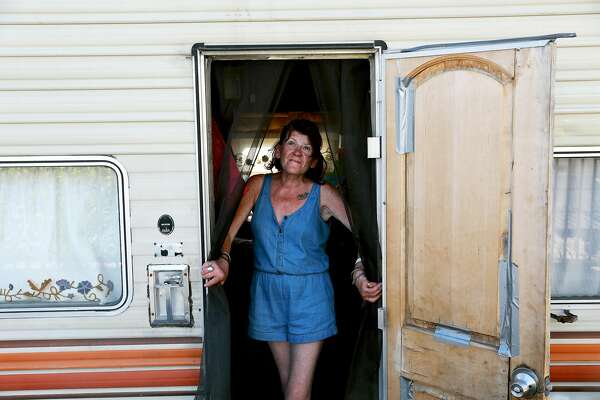
Last month, the city opened its first safe RV parking site in East Oakland.
The space, near the Coliseum BART Station, has security, a full-time
site manager, portable toilets and wash stations with mobile shower
trucks that will begin making weekly visits soon. Several weeks ago, the
city revealed plans to open a safe RV parking site for vehicle dwellers in front of Home Depot’s store in the Fruitvale neighborhood in coming months.
Earlier this month, the city opened its fifth community cabin site
near 35th and Magnolia streets. Residents of a nearby encampment will
be moved into the site before the encampment is shut down.
In
spite of the initiatives, many advocates for homeless people said the
city was not doing enough. Some said the community cabin sites and RV
parking sites don’t offer enough space for the number of homeless people
in the city. Instead, they urged the city to think of solutions that
provide affordable housing to everyone who needs it.
“We
have a one-size-fits-all model, and it’s not working, and it’s
contributing to the homelessness crisis,” said Margaretta Lin, the
executive director of Just Cities/the Dellums Institute. “I think what
troubles me is we are not devoting enough of our new affordable housing
stock to be affordable to people who are currently unhoused, or the
working poor.”
Alameda
County Supervisor Nate Miley agreed that the county and cities have a
lot of work to do to eradicate homelessness by their set goal of 2024.
“It’s
clearly a short-term solution to have the safe car parking, to try to
have the cabin communities, to try to support sanctioned encampments,”
he said.
Miley
said he was committed to building affordable housing for all income
levels at a faster pace. Monday’s meeting was the first time that mayors
from all of the county’s cities and the Board of Supervisors convened
specifically to address the homelessness epidemic, a gathering that
Miley said was a good first step. He said the group was looking to begin
meeting quarterly to evaluate progress on the issue.
Elsewhere
in the county, Berkeley reported a 13% increase since 2017 with 1,108
homeless people — 295 who were sheltered, 813 who were unsheltered —
compared with 972 people two years ago. San Leandro’s homeless
population grew from 109 in 2017 to 418 this year.
SF Homeless Project
This month, beginning July 28, The Chronicle will again join
with other Bay Area news outlets in the SF Homeless Project, a media
collaboration exploring causes and solutions to our regional
homelessness crisis.
July 28: We answer your questions on homelessness and offer a guide to ways you can help.
July 29: The Chronicle assesses the effectiveness of a San Francisco program that offers homeless people a bus ticket home.
July 29-31: Our Fifth & Mission podcast tackles the issue of homelessness.
July 30: San Francisco Mayor London Breed and an expert panel discuss homelessness at the first of two public events.
July 31: The Chronicle presents an in-depth report, “24 Hours of Homelessness.”
Aug. 8: San Jose Mayor Sam Liccardo and an expert panel discuss homelessness in front of a live audience.
To submit questions, purchase tickets to the public events and find all our reporting on this topic, go to:http://www.sfchronicle.com/homelessness
Supported by Cisco
July 28: We answer your questions on homelessness and offer a guide to ways you can help.
July 29: The Chronicle assesses the effectiveness of a San Francisco program that offers homeless people a bus ticket home.
July 29-31: Our Fifth & Mission podcast tackles the issue of homelessness.
July 30: San Francisco Mayor London Breed and an expert panel discuss homelessness at the first of two public events.
July 31: The Chronicle presents an in-depth report, “24 Hours of Homelessness.”
Aug. 8: San Jose Mayor Sam Liccardo and an expert panel discuss homelessness in front of a live audience.
To submit questions, purchase tickets to the public events and find all our reporting on this topic, go to:http://www.sfchronicle.com/homelessness
Supported by Cisco
Read More
Across
Alameda County, the Point-In-Time count showed that 57% of homeless
people have lived in the county for more than 10 years, while 12% have
lived in the county for less than a year. Sixty-three percent of people
have been homeless for more than a year.
“We need to get people off the street,” Schaaf said. “And I hope that that is what the renewed focus is on.”
Sarah Ravani is a San Francisco Chronicle staff writer. Email: sravani@sfchronicle.com Twitter: @SarRavani

No comments:
Post a Comment